Thursday, January 21, 2010

Roman Forum - Palatine Hill

Rome began on the Palatine Hill. The Palatine Hill is the centermost of the Seven Hills of Rome and is one of the most ancient parts of the city. It stands 40 metres above the Roman Forum, looking down upon it on one side, and upon the Circus Maximus on the other. You can see it's relationship to the Coliseum and the Forum on this interactive map.

According to Roman mythology, the Palatine Hill was the location of the cave, known as the Lupercal, where Romulus and Remus were found by the she-wolf that kept them alive.

Roman Ruins on Palatine Hill. Carol is hiding somewhere in this picture; can you find her?

Click image to embiggen

Wednesday, January 20, 2010

Roman Forum - Temple of Castor and Pollux

The temple of Castor and Pollux was originally built in gratitude for victory at the battle of Lake Regillus (495 BC). Castor and Pollux (Greek Polydeuces) were the Dioscuri, the "twins" of Gemini, the twin sons of Zeus (Jupiter) and Leda. The facade faced toward the Forum piazza with 19 columns (only 3 remain) surmounted on a trabeation.

It is in the Roman Forum - number 10 on this interactive map.

The Temple of Castor and Pollux.

Click image to embiggen

Backlit Temple of Castor and Pollux.

Click image to embiggen

Temple of Castor and Pollux and the Arch of Septimius Severus (number 16 on the interactive map) as seen from the Palatine Hill (PALATINO on the interactive map).

Click image to embiggen

Tuesday, January 19, 2010

Roman Forum - Temple of Antoninus and Faustina

The Temple of Antoninus and Faustina was built by the emperor Antoninus Pius shortly after the death of his beloved wife Faustina in 141AD. The remains of the temple was converted into a church, San Lorenzo in Miranda, in the 7th or 8th century. It is is the Roman Forum - number 6 in this interactive map.


Click image to embiggen

Monday, January 18, 2010

Pantheon

These three pictures are of the Pantheon. It was originally built in 27 BC as a temple to all the gods of Ancient Rome. In Medieval times Pope Boniface IV converted it into a Christian church. Since the Renaissance it has been used as a tomb.

The people in the pictures will give some scale to the immensity of it.

The portico of the Pantheon.

Click image to embiggen
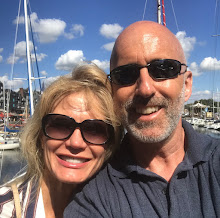
The altar in the Pantheon.

Click image to embiggen

The interior and the dome.

Click image to embiggen

Friday, January 15, 2010

View from the Coliseum

This is the Temple of Venus as seen from the Coliseum. It's number 3 on this interactive map.

The Temple of Venus

Click image to embiggen

Thursday, January 14, 2010

Inside the Coliseum

4 Scenes in the Roman Coliseum.

A view of the hypogeum.

Click image to embiggen

Carol on the upper level.

Click image to embiggen

Seating, arena and hypogeum.

Click image to embiggen

Entry to the Coliseum.

Click image to embiggen

Wednesday, January 13, 2010

Outside the Coliseum

Today's pictures are of the exterior of the Roman Coliseum. Tomorrow; the interior.

The Coliseum. Carol has been carefully hidden in this picture. Can you find her?

Click image to embiggen

The Coliseum in its modern context.

Click image to embiggen